Student Mental Health: Challenges and Support Systems in Universities
Student mental health has become a major concern in higher education institutions worldwide. With increasing academic pressure, financial stress, social challenges, and uncertainty about the future, many students experience anxiety, depression, and burnout during their university years. Addressing these issues is essential for building healthier, more productive learning environments.
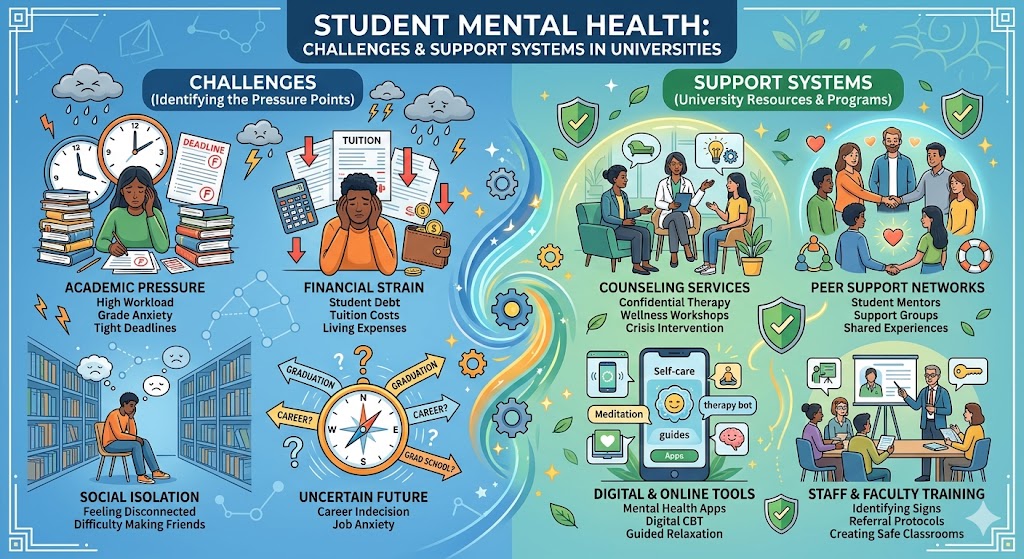
1. Academic Pressure and Performance Stress
One of the biggest challenges students face in universities is intense academic pressure. Tight deadlines, frequent examinations, and competition for grades often lead to chronic stress. Many students feel compelled to maintain high GPAs to secure scholarships, internships, or future job opportunities.
This constant pressure can result in sleep deprivation, reduced concentration, and long-term anxiety. Over time, it may even lead to academic burnout, where students lose motivation and struggle to continue their studies effectively.
2. Social Isolation and Adjustment Difficulties
For many students, university is the first experience away from home. Adjusting to a new environment, making friends, and adapting to independent living can be overwhelming. International and out-of-state students are especially vulnerable to loneliness and cultural adjustment issues.
Social isolation can significantly impact mental well-being. Without strong support networks, students may feel disconnected, which increases the risk of depression and anxiety.
3. Financial Stress and Future Uncertainty
Rising tuition fees, living expenses, and student loans contribute heavily to mental stress. Many students take part-time jobs alongside studies, which can further increase fatigue and reduce study time.
Uncertainty about future career paths also adds emotional strain. Concerns about employability, job market competition, and financial independence can create persistent anxiety among students nearing graduation.
4. Support Systems in Universities
To address these challenges, many universities have developed structured mental health support systems. These include:
- Counseling services: Professional psychologists and counselors help students manage stress, anxiety, and emotional difficulties.
- Peer support groups: Students can share experiences and support each other in a safe environment.
- Mental health workshops: Programs focused on stress management, mindfulness, and emotional resilience.
- Academic advising: Helps students manage workload and improve study strategies.
- Helplines and crisis support: Immediate assistance for students in distress.
According to global health organizations like the World Health Organization, early intervention and accessible mental health care in educational settings significantly improve student outcomes and well-being.
Conclusion
Student mental health is a critical aspect of university life that directly affects academic success and personal development. While challenges such as academic pressure, social isolation, and financial stress are common, strong institutional support systems can make a meaningful difference. Universities that prioritize mental well-being help students not only succeed academically but also develop resilience for life beyond graduation.